
Most homeowners don’t think about their staircase until something goes wrong. But a failing staircase isn’t just an aesthetic problem — it can be a safety issue that affects your home’s value and insurability. Here are 7 warning signs that it’s time for a replacement, not a repair.
Warning Sign #1: Significant Creaking That Doesn’t Respond to Repair
If your stairs creak loudly on every step or creak more each year despite professional repair, the structural connection between treads and stringers is failing. In older Ontario homes, decades of humidity cycling causes mortise-and-tenon joints to open permanently.
Warning Sign #2: Any Side-to-Side Railing Movement
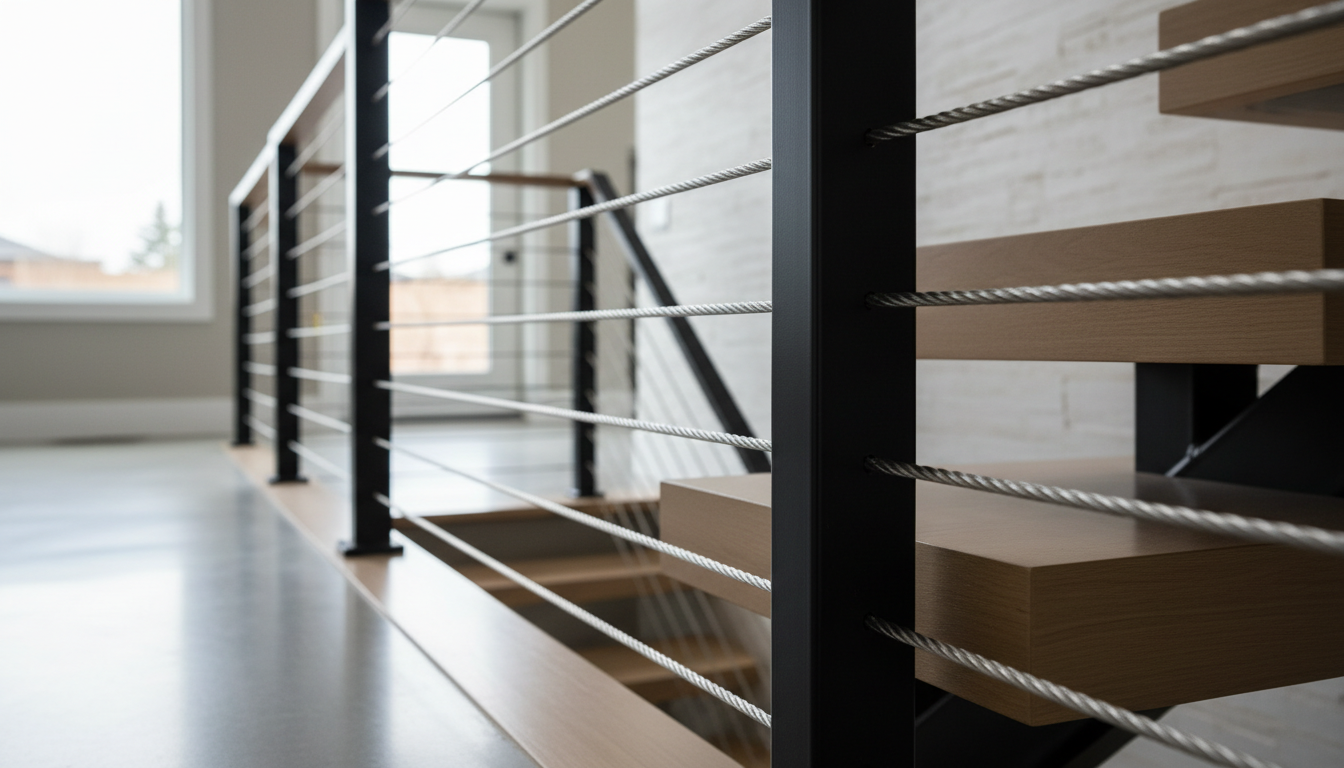
Grasp your railing and push it sideways — there should be zero movement. OBC requires railings to resist a 0.75 kN horizontal load (~170 lbs). Any lateral play is a safety failure and a fall risk, especially for children and seniors.
Warning Sign #3: Visible Dry Rot or Soft Wood
Press firmly on treads, newel posts, and the underside of stringers. If the wood feels soft, spongy, or crumbles, dry rot (fungal decay) has compromised structural integrity. Dry rot spreads — all wood in contact must be inspected.
Warning Sign #4: OBC Non-Compliance (Especially If Selling)
Pre-1990 Ontario homes frequently have violations: rise over 200mm, run under 210mm, headroom under 1,950mm, railing height under 865mm. These will come up in a home inspection if you’re selling and require disclosure.
Warning Sign #5: Worn-Through Treads or Exposed Subfloor
Treads built 1960–1990 were often only 19–25mm thick. When the nosing is visibly worn or carpet removal reveals bare subfloor at tread edges, the treads are past their functional life.
Warning Sign #6: The Staircase No Longer Fits the Home
If you’ve renovated to open concept, a closed-riser pine staircase with a thick oak handrail cap looks out of place — not because it failed structurally, but because it no longer belongs aesthetically.
Warning Sign #7: Structural Cracking at Floor Connections
Drywall or plaster cracking radiating from the stringer-to-floor connection means the staircase is moving relative to the structure — caused by inadequate anchors, settlement, or rot at the sill plate.
Staircase Replacement Costs in Ontario (2025)
| Replacement Type | Price Range (Installed) |
|---|---|
| Traditional box stringer (white oak) | $8,000 – $12,000 |
| Open riser double stringer | $10,000 – $15,000 |
| Floating mono-stringer, glass railing | $18,000 – $28,000 |
| Tread-only replacement | $2,500 – $6,000 |
Not sure if you need repair or replacement? Book a free consultation — C.O.R.S will assess your existing staircase and give you an honest recommendation. See our full staircase renovation guide.
When to Replace Staircase Ontario: Related Resources
- Staircase renovation Ontario — complete guide to renovation options: refinishing, tread replacement, full rebuild
- Staircase refinishing Ontario — when refinishing is the right call vs. when replacement is smarter
- Ontario Building Code staircase — the OBC safety standards your replacement must meet
- Floating staircase Ontario — replacement options including mono-stringer floating systems
- Custom staircase cost Ontario — replacement cost vs. renovation cost compared
- Staircase renovation Barrie Ontario — Barrie-area replacement and renovation with no Simcoe County surcharge
Book a free C.O.R.S safety assessment: 705-999-0000 | corsstairs.ca/contact